Blog
Five ways to measure, manage, and maximize impact

Our portfolio partner, Advance Global Capital, uses IMM in their work to provide fair access to capital for small businesses in underserved communities worldwide. Pictured is one of their end borrowers, Mark Twain International School, in Romania.
By Caitlin Rosser and Laura Mixter
Impact investing is growing. The Global Impact Investing Network’s (GIIN) State of the Market 2025 report indicates that impact AUM has increased at a compound annual growth rate of 21% over the past six years with an 11% increase in 2025 alone. With the industry developing at such a rapid pace, it’s more important than ever to be able to demonstrate rigor and transparency when it comes to impact claims.
Many leaders in the impact investing space, including Calvert Impact, do this through the practice of Impact Measurement and Management (IMM). IMM is the process of identifying and assessing impact while also managing the investment process to maximize the positive and minimize the negative. It ensures that the better we measure our impact, the more we can maximize it.
After three decades at the forefront of IMM, we have seen the field's full evolution and have developed practical tools to distinguish impact integrity of investments. Here are five lessons we’ve learned about IMM to shape meaningful, impactful investments:
1. Align to frameworks but keep unique DNA
We hear a lot in the industry about the need for standardization. When firms coalesce around specific frameworks, the entire industry benefits. At the same time, it’s equally important to maintain a unique impact thesis and keep organizational mission at the forefront.
Creating harmonized tools is one way to do that. Our Impact Scorecard, the impact due diligence tool for the Community Investment Note®, is rooted in best practices but tailored to our mission and values. When Calvert Impact launches new products, we take what we built for the core portfolio and adapt it to better fit these new strategies.
For Calvert Impact’s Cut Carbon Note®, a product that finances sustainability upgrades for commercial buildings, specific due diligence processes and documentation inspired our team to create a more streamlined impact checklist to assess performance against impact standards while assessing operational risks through a social and environmental lens. We employed best practice but adapted the tool to the reality of our portfolio.
This harmonization approach is evident in other high integrity impact managers. For example, Finance in Motion is another fund manager that employs common frameworks across a range of impact funds with diverse impact mandates, from sustainability and conservation to financing for micro, small, and medium enterprises (MSMEs). They tailor common IMM best practices to their unique strategies, like their new science-based impact metric that quantifies biodiversity impacts, drawing from the Biodiversity Footprint Financial Institutions (BFFI) methodology.
2. Distinguish the different layers of impact across a system
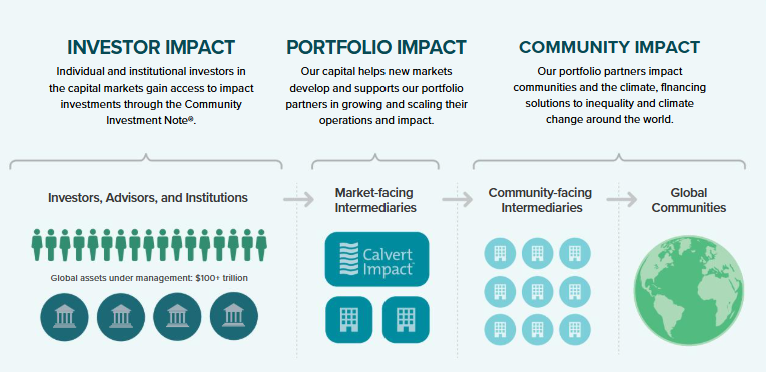
Impact goes beyond what happens on the ground, as both investors and investees benefit alongside communities. We define impact in three layers – investor, portfolio, and community – recognizing the unique value we provide across three key stakeholders and for the market as a whole. By taking this systems approach, firms can better manage and articulate the impact of investments, including the intermediaries that serve the small businesses and individuals.
One example of multi-layered assessment at work is Advance Global Capital (AGC), a fund manager that works through local financing partners to provide fair access to capital for small businesses in underserved communities worldwide. Because AGC works through financing partners, they assess impact at both the partner and small business levels through an annual portfolio survey. In their 2026 survey, 100% of respondents' programs tailored to women entrepreneurs or other underserved groups. They identified the most common reason small businesses use financing partners is faster funding turnaround — enabling them to fulfill orders, import raw materials, and stay responsive during busy seasons, while offering competitive products and maintaining steady employment. Capital flowing to small businesses with employees generates a compounding multiplier effect: employees earn wages, spend locally, and patronize other small businesses whose workers do the same — propagating economic benefit well beyond the original transaction. This multi-layer approach allows AGC to more holistically evaluate impact across the financing supply chain.
3. Incorporate IMM throughout the investment lifecycle
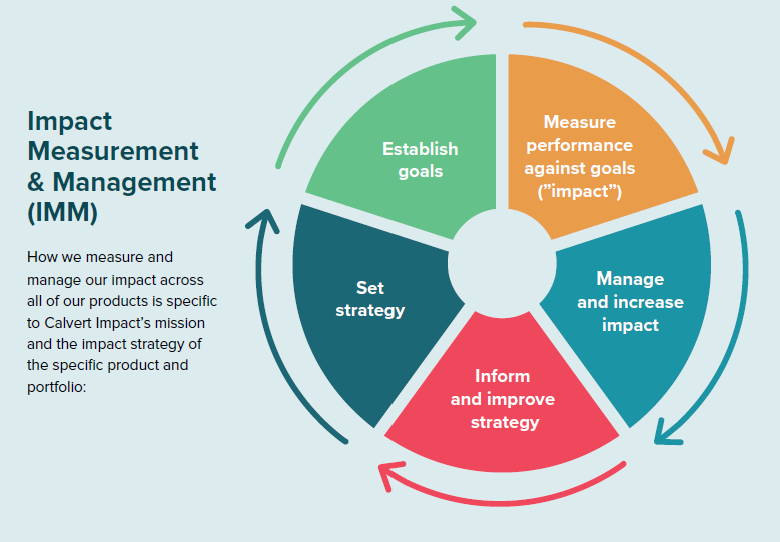
IMM is not one step in the investment process. Rather, it’s a cycle that follows investments from origination to exit and informs future strategy. This is a foundational premise of the nine Operating Principles for Impact Management adopted by nearly half of the industry over the last seven years.
At due diligence, firms should assess the expected impact of every transaction – from investees to their community – and track ongoing progress. To manage impact risk, reevaluate top exposures and every investment at repayment to assess impact at exit. This process informs impact strategy and future impact due diligence, creating a cycle of continuous learning and improvement.
4. Meet borrowers where they are
Every organization brings different capacity for impact measurement, and there is truly no one-size-fits-all approach to reporting. Working with each borrower to identify which existing processes can be used for impact reporting is key to avoid undue burden from the data collection process. Identifying additional data needs during due diligence can help borrowers integrate new reporting needs into their operations over the life of the loan or investment.
When Calvert Impact first invested in Sygnus Capital Puerto Rico (formerly Acrecent Financial), they had been lending to small businesses on the island for two decades but had never formally collected or reported impact data. We worked with them closely to implement impact reporting, which involved adapting existing processes and adopting new ones that were within reach. Today, Sygnus Capital Puerto Rico reports a variety of impact metrics as a result, including jobs retained, small business revenue generation, and client demographics, and harnesses that impact information for deeper insights into their work and impact.
5. Create space for continuous improvement
Effective organizations treat IMM as a commitment to an ongoing learning process. Rather than becoming paralyzed by trying to perfect tools and processes, they can take a phased approach that allows teams to test, adapt, and improve tools over time. Taking it in phases can help organizations adjust and adapt over time while avoiding the risk of IMM tools not working because they were not adequately tested.
When Calvert Impact refreshed its impact management framework in 2016, we started with updated theories of change and aligned impact metrics sets. Two years later, once we felt those were adequately implemented, we developed and tested our Impact Scorecard to support more consistent and robust impact due diligence. We then spent a few years following trends in our impact scores before setting targets and incorporating those goals into company-level KPIs. These improvements took place over a period of six years and built on each other with lessons learned from the previous step.
Focusing on the Journey
One of the most important things that we’ve learned from our years of experience is that IMM is a journey, not a destination. Progress comes not from getting everything right at the start, but from building systems that can adapt and strengthen over time. We are always looking for ways to improve our IMM practices, and we’ll continue to adapt our frameworks as we launch new products and grow our existing ones.
Maximizing positive impact through practical, real-world IMM tools enables investors to truly understand the holistic impact of their investments while meeting the capital needs of communities. IMM helps investors go beyond simply reporting “lives changed” to measuring how lives were changed, shaping portfolios to transform more lives in the future.
Calvert Impact is a current investor in funds advised by Sygnus Capital Puerto Rico, LLC, a registered investment adviser. The views expressed above reflect Calvert Impact's experience and may not be representative of the experience of other investors. Sygnus Capital Puerto Rico did not compensate Calvert Impact for this statement.